
What approvals apply to basically every studio?
Start with the approvals tied to your business and your building: business registration, local licensing, zoning or permitted use, occupancy and fire requirements, tax registration, and insurance. Names for these vary by city, so get each authority to confirm the exact requirement in writing — don't copy a checklist made for a different city.
Treat your lease as part of the licensing process, not separate from it. A landlord telling you "the space is fine for this" isn't the same as the local authority approving classes, food, or alcohol there. If local advice supports it, make your lease conditional on getting the approvals you actually need.
How does your alcohol model change everything?
Your alcohol model is the biggest variable by far. Selling drinks, including a drink in the ticket price, letting guests bring their own, and running inside a licensed venue can all be treated completely differently under local law. Don't assume BYOB means no permit needed, or that a venue's existing license automatically covers your event.
- Licensed sales — confirm license type, service area, service hours, staff training, and age verification.
- BYOB — confirm whether guests can bring alcohol, whether you're allowed to open or pour it, and whether you still need a permit or insurance endorsement.
- Mobile events — get it in writing who's responsible: you, the venue, or both.
- Alcohol-free classes — keep this promise crystal clear in your booking copy so guests and staff both know what's on offer.
What insurance should you actually be talking to your insurer about?
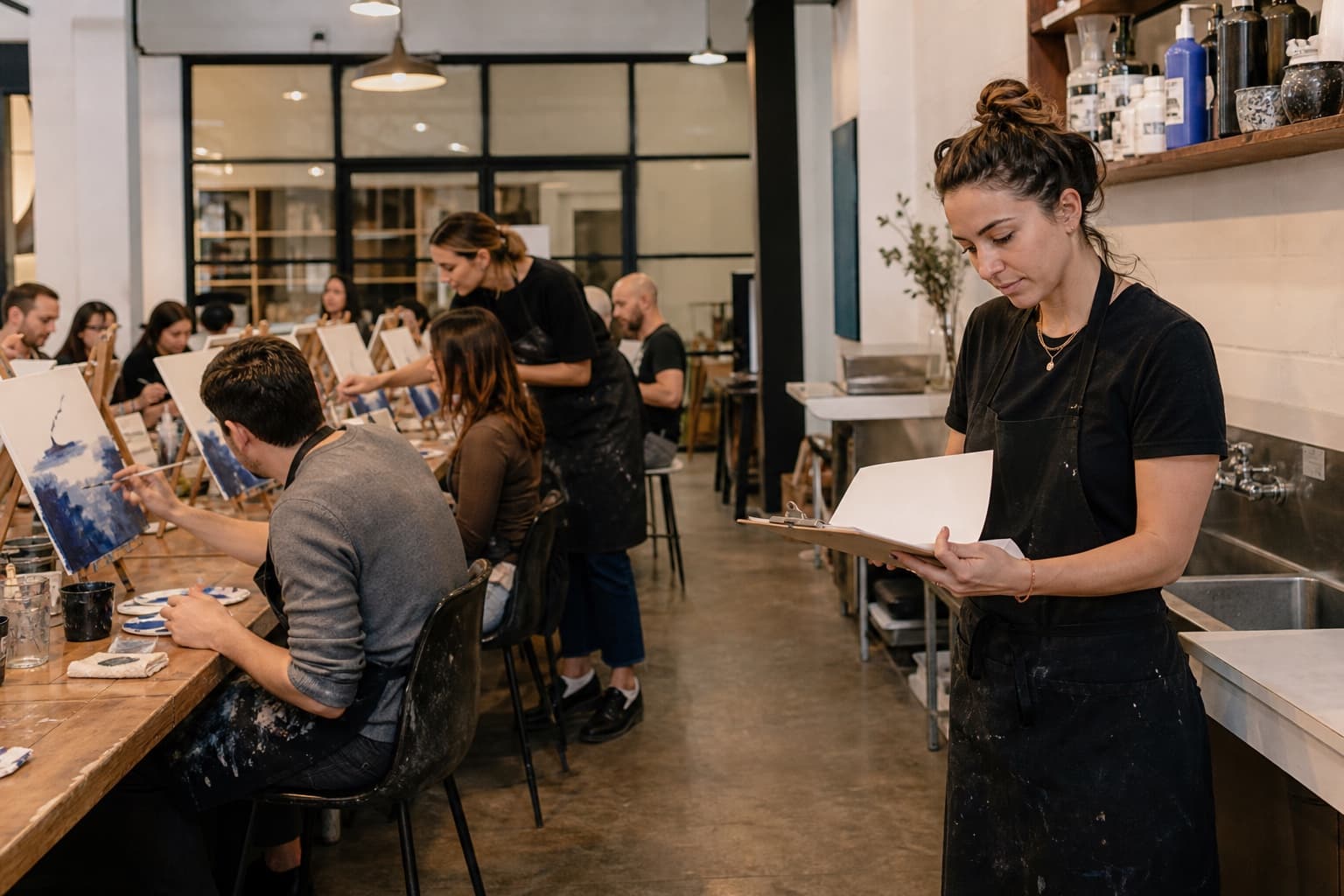
Describe exactly what happens in a class: guests use paint and tools, instructors lead groups, drinks may be present, and you might run events off-site. Ask specifically about general liability, property and equipment coverage, worker/employee coverage, liquor-related exposure, and mobile-event coverage. A generic retail policy might not actually cover what you're doing.
Keep your certificates, renewal dates, and any landlord requirements together in one place. If your model changes — say you start serving drinks or running corporate events off-site — check with your insurer whether your policy needs to change first.
Which rules are easy to accidentally miss?
Playing recorded music might need a public-performance license. Preparing or selling food can trigger health rules. Exterior signage might need approval. Hiring instructors might create payroll or contractor obligations. Collecting customer photos and info creates privacy responsibilities. Accessibility rules can affect both your physical space and your booking experience online.
The safest move: write a one-page description of what you sell, what guests bring, who works each class, where events happen, and what customer data you collect. Give the same description to every authority and adviser so their answers are all based on the same actual business.
When should you start this process?
Before you commit to a location or a launch date. Ask each authority about current forms, fees, inspection steps, and how long things typically take, then build your opening plan around whichever approval is slowest. Keep every confirmation and receipt. If an answer feels vague or verbal, ask where it's published or get it in writing.
Source of truth
Sources and verification
We prioritize primary sources. Practical judgment is presented as Painta operator guidance, not a universal rule.
- 01Apply for licenses and permits
U.S. Small Business Administration
The location- and activity-specific licensing framework used by this checklist.
Checked: 2026-08-08 - 02ADA Standards for Accessible Design
U.S. Department of Justice
Why accessibility belongs in premises and alteration checks for U.S. studios.
Checked: 2026-08-08 - 03Guidance on Web Accessibility and the ADA
U.S. Department of Justice
Why a public booking experience must be considered alongside the physical space in the U.S.
Checked: 2026-08-08
Legal, tax, and licensing requirements vary by place and operating model. Confirm the final decision with the relevant local authority or qualified adviser.
FAQ
Questions operators ask next
Is there just one paint and sip business license?
No — you're combining ordinary business and premises approvals with activity-specific rules. Alcohol, food, music, signage, employment, and mobile events can each add their own requirement depending on where you are.
Does a BYOB studio need an alcohol permit?
It depends on local law and exactly what your staff do with the alcohol — some places treat guest-supplied drinks differently, but opening, pouring, storing, or including drinks with a ticket can all change the answer. Confirm the exact setup with your local regulator.
Can I rely on the venue's liquor license for a mobile event?
Don't assume so — ask the venue and the regulator directly whether their license covers your event, your staff, and the way you're selling tickets or drinks. Get responsibility spelled out in the venue agreement.
Should I sign a lease before applying for permits?
Get local advice first. Confirm zoning, occupancy, fire, accessibility, and alcohol feasibility for that exact address before your lease becomes unconditional — and make it conditional on the approvals you need, if you can.
What records should I keep after approval?
Keep approvals, inspection reports, insurance certificates, training records, renewal dates, and written answers from authorities in one operating folder. Assign an owner and reminder for every renewal so an expired document does not interrupt classes.